
Matwork Pilates, Reformer Pilates and Studio Pilates: What’s the Difference?
Discover the differences between Matwork Pilates, Reformer Pilates, and Studio Pilates, from the equipment used to the unique benefits each style offers. Whether you’re new to Pilates or looking to deepen your practice, this guide explores how each method can support strength, posture, mobility, and better movement for everyday life.
If you are new to Pilates, it can sometimes feel confusing trying to understand the different styles of Pilates available today. You may have heard terms such as matwork Pilates, reformer Pilates, studio Pilates, clinical Pilates, or equipment Pilates and wondered what the actual difference is between them. The good news is that they all come from the same Pilates method and share many of the same core principles, including:
Breath
Control
Alignment
Precision
Flow
Body awareness
However, the way the exercises are performed and the equipment used can vary quite a lot depending on the style of Pilates being taught.
What Is Matwork Pilates?
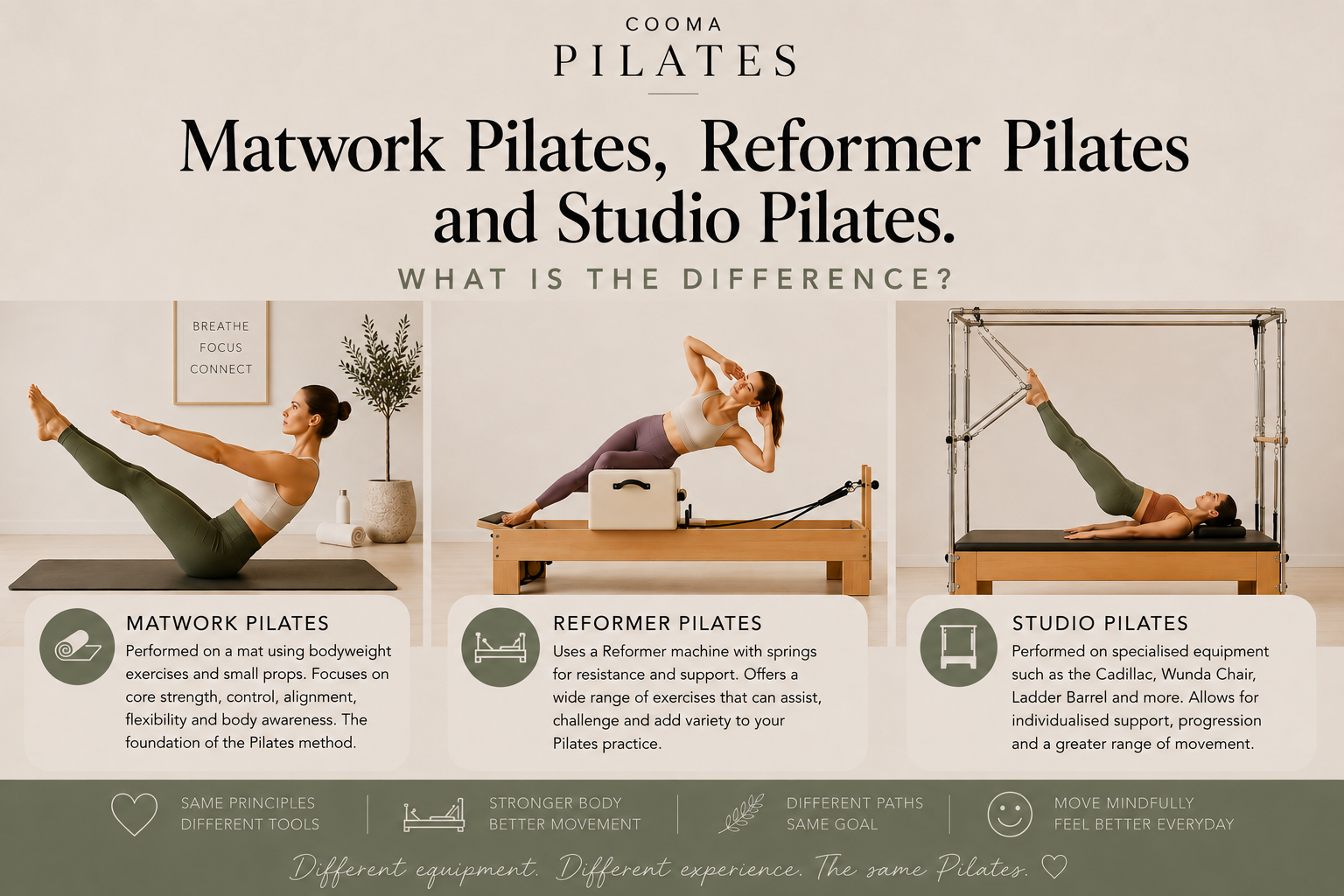
Matwork Pilates is one of the most traditional and foundational forms of Pilates. Matwork classes are primarily performed on a mat using bodyweight exercises, sometimes with the addition of small props such as resistance bands, Pilates balls, foam rollers, magic circles/Pilates rings, or light hand weights. Many of the original Pilates principles and movement patterns are taught through mat-based exercises, making matwork an important foundation within the Pilates method. Because matwork relies mostly on bodyweight movement, it can be a fantastic way to develop:
Core strength
Posture and alignment
Body awareness
Coordination
Mobility and flexibility
Control and stability
At Cooma Pilates, classes focus on supportive matwork Pilates in a welcoming and approachable environment.
What Is Reformer Pilates?
Reformer Pilates uses a specialised piece of Pilates equipment called the Reformer. The Reformer features a moving carriage connected to a spring resistance system, allowing exercises to be performed with varying levels of support or resistance. Reformer Pilates can feel quite different from matwork Pilates because the equipment changes how the body moves and interacts with resistance. Some people enjoy Reformer Pilates because the equipment:
Adds variety to exercises
Provides spring resistance
Can assist certain movements
Can increase challenge in different ways
Offers a different movement experience
Reformer Pilates classes can range from gentle and supportive through to highly athletic depending on the instructor, studio style, and class level.
What Is Studio Pilates?
The term “studio Pilates” usually refers to Pilates sessions performed using larger specialised Pilates equipment. This may include:
Reformer
Cadillac or Trapeze Table
Wunda Chair
Ladder Barrel
Spine Corrector
These pieces of equipment were also developed by Joseph Pilates as part of the original Pilates method. Studio Pilates sessions are often:
One-on-one private sessions
Semi-private sessions
Small group equipment classes
Because studio equipment allows for a wide variety of exercise options, studio sessions can sometimes be more individualised depending on the person’s needs, goals, movement experience, or rehabilitation requirements.
Is One Better Than the Other?
Not necessarily. Matwork Pilates, reformer Pilates, and studio Pilates are simply different ways of practicing Pilates. Each style has its own benefits, challenges, and movement experiences. Some people prefer matwork Pilates because they enjoy the simplicity of bodyweight movement and the strong focus on control, posture, and body awareness. Others enjoy Reformer Pilates because they like the spring resistance, moving equipment, and variety of exercises available. Many people enjoy combining different styles of Pilates depending on their goals, preferences, and access to equipment.
Which Type of Pilates Is Best for Beginners?
This often depends on the individual, the instructor, and the style of class being offered. Beginner-friendly matwork Pilates can be a fantastic introduction to Pilates because it helps people learn:
Basic Pilates principles
Breathing patterns
Core control
Alignment
Awareness of movement
Studio or reformer sessions can also be excellent for beginners, particularly in smaller or more individualised settings where exercises can be tailored more specifically to the person.
Pilates Is More Than Just Equipment
One common misconception is that Pilates is only “real Pilates” if equipment is involved. In reality, matwork Pilates remains a very important and traditional part of the Pilates method. The equipment does not replace the principles of Pilates — it simply offers another way to explore movement, strength, control, and body awareness. Whether on a mat or equipment, Pilates is ultimately about learning to move with greater awareness, control, balance, and efficiency.
Final Thoughts
There is no single “best” type of Pilates. The most important thing is finding a style, instructor, and environment that helps you feel supported, comfortable, and motivated to move. Whether you choose matwork Pilates, reformer Pilates, or studio Pilates, all forms of Pilates share the same goal — helping people move and feel better through mindful, controlled movement.
A Beginners Guide to Matwork Pilates
New to Pilates? This beginner-friendly guide explores what Matwork Pilates is, what to expect in class, and how it can help improve strength, posture, mobility, balance, and body awareness. Learn why Pilates is suitable for all ages and fitness levels, and discover how supportive movement can help you feel stronger and move better in everyday life.
Starting something new can sometimes feel intimidating, especially when you are unsure what to expect. The good news is that matwork Pilates is designed to be accessible, supportive, and adaptable for many different fitness levels.
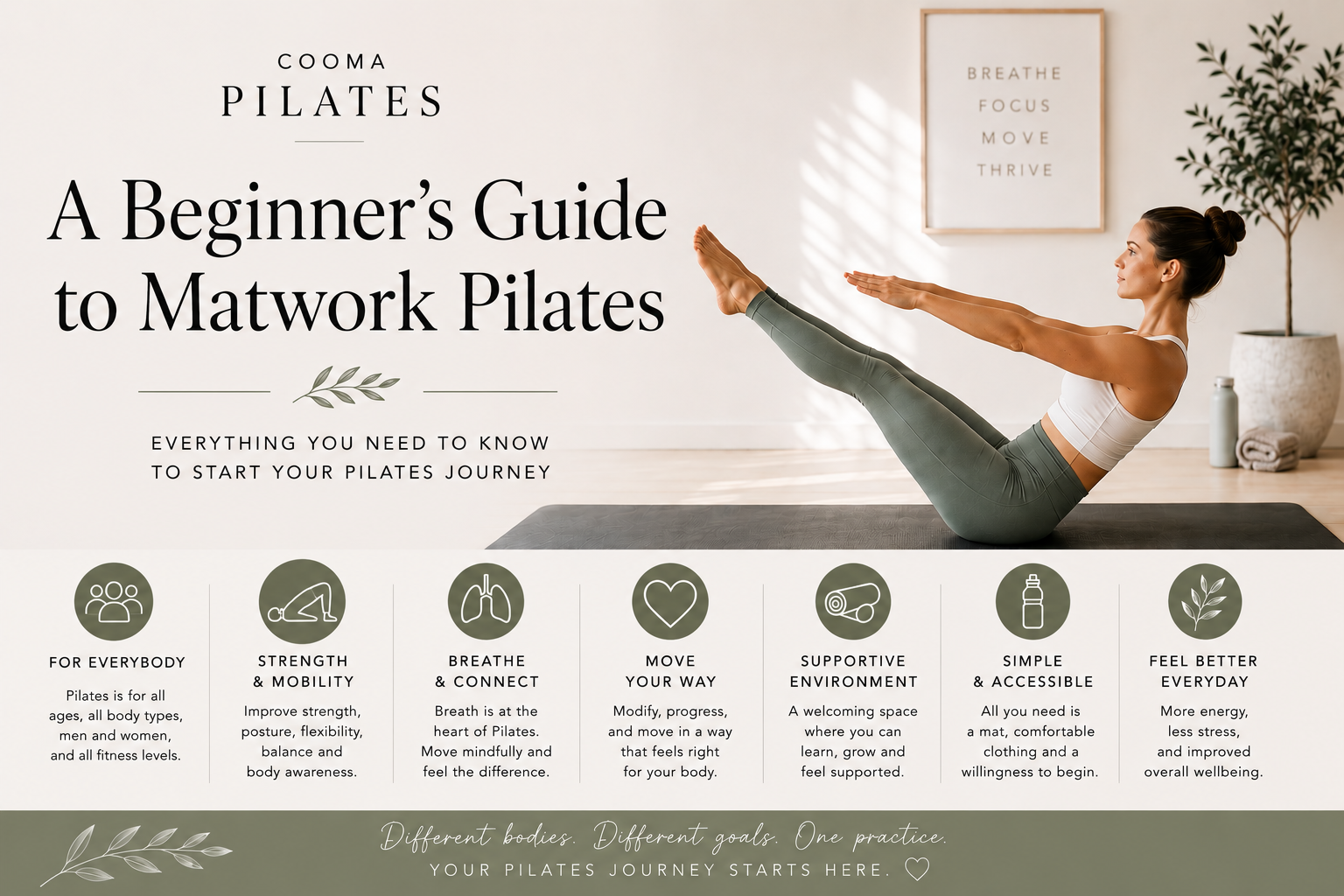
Matwork Pilates focuses on controlled movement, posture, alignment, strength, flexibility, and breath. Classes are typically performed on a mat using bodyweight exercises, sometimes with the addition of small props such as resistance bands, Pilates balls, foam rollers, or light hand weights.
Unlike fast-paced workouts that focus purely on intensity, Pilates encourages mindful movement and quality over quantity. The aim is not to push through exercises as quickly as possible, but to move with awareness, control, and precision.
At Cooma Pilates, classes are designed to create a welcoming and supportive environment where participants can focus on moving in a way that feels good for their body.
What Happens in a Matwork Pilates Class?
Every instructor and class style can vary slightly, but most matwork Pilates classes include:
Breathing and warm-up exercises
Core and postural strengthening
Mobility and flexibility work
Balance and coordination exercises
Controlled full-body movement patterns
Cool down and stretching
Pilates classes are often structured to flow smoothly from one exercise to another while encouraging control, concentration, and awareness throughout the session.
Some exercises may feel gentle and controlled, while others can feel more challenging depending on the movement and the individual. One of the unique things about Pilates is that small, precise movements can often feel surprisingly effective.
Do I Need to Be Flexible to Start Pilates?
Definitely not.
A common misconception is that you need to already be flexible, fit, or experienced before starting Pilates. In reality, many people begin Pilates to help improve mobility, posture, strength, flexibility, and body awareness over time.
Pilates is designed to meet people where they are at. Exercises can often be modified depending on individual comfort levels, movement experience, injuries, or mobility restrictions.
The goal is not to perform exercises perfectly straight away. Pilates is a practice that develops gradually over time with consistency and awareness.
What Should I Wear to Pilates?
Comfortable clothing that allows you to move freely is usually best for Pilates. Activewear or fitted stretchy clothing tends to work well because it allows ease of movement while also helping you feel comfortable and supported throughout the class.
Very loose clothing can sometimes shift during exercises or certain positions, which may leave people feeling a little more exposed than expected. For example, loose tops may fall forward during plank positions, and very loose shorts may not always feel practical during leg movements. Many people simply choose activewear-style clothing that feels secure and comfortable to move in.
You do not need expensive activewear or highly compressive gym clothing to do Pilates. The most important thing is that you feel comfortable, supported, and able to move easily throughout the class.
Pilates is usually performed barefoot or in grip socks. If using grip socks, it is worth checking that the grips still feel secure, as older socks can sometimes become slippery over time.
What Should I Bring to Class?
For most matwork Pilates classes, all you usually need is:
A water bottle
Comfortable clothing
Grip socks if preferred
At Cooma Pilates, mats and towels are provided, although participants are always welcome to bring their own towel if they prefer.
What Are the Benefits of Matwork Pilates?
Many people enjoy matwork Pilates because it can help improve:
Core strength
Posture and alignment
Flexibility and mobility
Balance and coordination
Body awareness
Muscular endurance
General wellbeing
Pilates can also be a wonderful way to slow down, reconnect with your body, and focus on mindful movement and breath.
Pilates Is Not a Competition
One of the most important things to remember when starting Pilates is that everybody moves differently.
Pilates is not about comparing yourself to the person next to you or trying to keep up with others in the room. The focus is on your own movement, your own breath, and learning what feels right for your body.
Exercises can often be modified depending on individual needs. Some people may choose more supportive options, while others may progress exercises further depending on their experience and comfort level.
Group Pilates classes are generally designed to suit a broad range of people rather than being written specifically for one individual. This is why classes are often labelled as beginner, intermediate, or advanced.
The Importance of Breath in Pilates
Breath is a very important part of Pilates.
Movements are often coordinated with breathing to help support control, focus, and flow throughout the exercises. Pilates encourages mindful movement and body awareness, helping people feel more connected to how their body moves and feels.
And yes — hearing people breathe in a Pilates class is completely normal. Pilates is not about staying perfectly quiet. Breathing properly is part of the practice.
Is Pilates Hard?
Pilates can absolutely feel challenging at times, but beginner-friendly classes are designed to help you build confidence gradually.
One of the unique things about Pilates is that small, controlled movements can feel surprisingly effective. It is not always about doing the biggest or hardest movement — often it is about learning how to move well.
Some exercises may feel easier than others depending on your body, previous movement experience, strength, mobility, or coordination. Over time, movements that once felt unfamiliar often begin to feel more natural.
Injuries, Health Conditions, and Modifications
If you have any injuries, health conditions, are pregnant, or are returning to exercise after time away, it is always important to let your instructor know before class.
In many cases, exercises can be modified to better suit individual needs. However, depending on the condition or stage of recovery, a private studio session or more individualised support may sometimes be more appropriate than a general group class.
If you are ever unsure, it is always best to speak with your instructor beforehand.
Is Pilates for Everyone?
One of the biggest misconceptions about Pilates is that it is only for young women or already-fit people. In reality, Pilates can be enjoyed by a wide range of people of different ages, backgrounds, and fitness levels.
Whether you are younger, older, completely new to exercise, or someone who has stayed active for years, Pilates can often be adapted to suit different stages of life and different movement needs.
Pilates was created by Joseph Pilates, and over time his method was practiced by athletes, dancers, performers, men and women from the general public, and people looking to improve strength, posture, control, and movement efficiency. Pilates also became well known among people returning to movement after injury or periods of physical limitation.
Today, Pilates is practiced by people of many different ages and abilities. Some people attend Pilates classes to help improve strength and posture, while others enjoy it for mobility, balance, flexibility, body awareness, or general wellbeing.
Pilates is not about being the fittest person in the room or looking a certain way. It is about learning to move your own body with greater control, awareness, and confidence over time.
Listen to Your Body
Pilates should leave you feeling challenged in a positive way, but it is important to listen to your body and move within a comfortable range.
If something does not feel right, it is always okay to pause, modify an exercise, or ask questions. Pilates is about developing awareness of your own body rather than pushing through discomfort unnecessarily.
If you are feeling unwell with a cold, flu, or other contagious illness, it is best to rest and stay home until you are feeling better — both for your own recovery and to help protect others attending the class.
And while it may sound simple, it is also a good idea to use the bathroom before class if needed, especially as Pilates involves a strong focus on the abdominal and core muscles. Of course, if you do need to step out during class, most instructors completely understand.
Tips for Your First Pilates Class
If you are attending your first matwork Pilates class, here are a few simple tips:
Arrive a few minutes early if possible
Let your instructor know if you are new
Move within a comfortable range for your body
Focus on breathing and control rather than perfection
Wear comfortable clothing you can move easily in
Bring a water bottle
Remember that everybody starts somewhere
The more consistently you attend Pilates, the more familiar and natural the movements often begin to feel over time.
Final Thoughts
Starting Pilates does not require perfection, flexibility, expensive activewear, or previous experience. It is simply about showing up, moving mindfully, and learning more about your body over time.
Matwork Pilates can be a wonderful way to build strength, improve posture, increase body awareness, and support overall wellbeing in a balanced and supportive environment.
If you are ever unsure about anything, asking your instructor questions is always encouraged. Pilates is a learning process, and everybody starts somewhere.
Who invented Pilates?
Discover the story behind Joseph Pilates, the creator of Pilates, and how his movement method became one of the world’s most popular forms of exercise.
Pilates was developed by Joseph Hubertus Pilates, a German physical trainer born in 1883 in Mönchengladbach, Germany.
As a child, Joseph Pilates experienced several health challenges, including asthma, rickets, and rheumatic fever. These illnesses left him physically weak during his younger years, but they also sparked a lifelong interest in movement, strength, anatomy, and physical conditioning. Determined to improve his health, Joseph studied a wide range of exercise methods and physical training techniques throughout his life, including gymnastics, boxing, self-defence, skiing, diving, yoga, and martial arts. Through consistent physical training and disciplined movement practice, he reportedly improved many of his own physical conditions and developed a strong, athletic body.
During World War I, Joseph Pilates was living in England. As a German national, he was interned in a camp on the Isle of Man during the war. It is widely believed that this period played an important role in the early development of his movement method, which he later called Contrology. While in the internment camp, Joseph reportedly worked with injured and unwell individuals, helping them move and exercise to maintain strength and mobility. Stories from this time suggest he experimented with using springs attached to hospital beds and mattresses to assist rehabilitation exercises — concepts that later influenced the development of Pilates equipment such as the Reformer and Cadillac.
Joseph Pilates believed strongly that the mind and body should work together through controlled, precise, and intentional movement. His method focused on posture, breathing, concentration, alignment, control, and flowing movement patterns that encouraged balanced strength and body awareness.
After the war, Joseph Pilates eventually moved to New York City with his wife Clara. Together, they opened a Pilates studio on Eighth Avenue in Manhattan, in the same building as several dance studios and rehearsal spaces. Their studio became especially popular amongst dancers, performers, athletes, and individuals recovering from injury due to its strong focus on posture, control, strength, flexibility, and efficient movement.
Joseph Pilates was known for being incredibly passionate about health, movement, and helping people improve the quality of their lives through exercise. Many loyal clients trained with him for years, and a number of his students later went on to open their own studios and continue teaching the Pilates method around the world.
Although many people learned directly from Joseph Pilates over the years, only a small number are believed to have completed a more formal apprenticeship-style training under him. Two of the most commonly documented names associated with this are Kathy Grant and Lolita San Miguel, who are often recognised as the only people to have received official certification directly from Joseph Pilates himself. However, many other students trained extensively with Joseph and Clara Pilates in their New York studio, learning the exercises, principles, and philosophy of the method through years of hands-on experience. These students later became highly respected teachers in their own right and played a major role in spreading the Pilates method internationally.
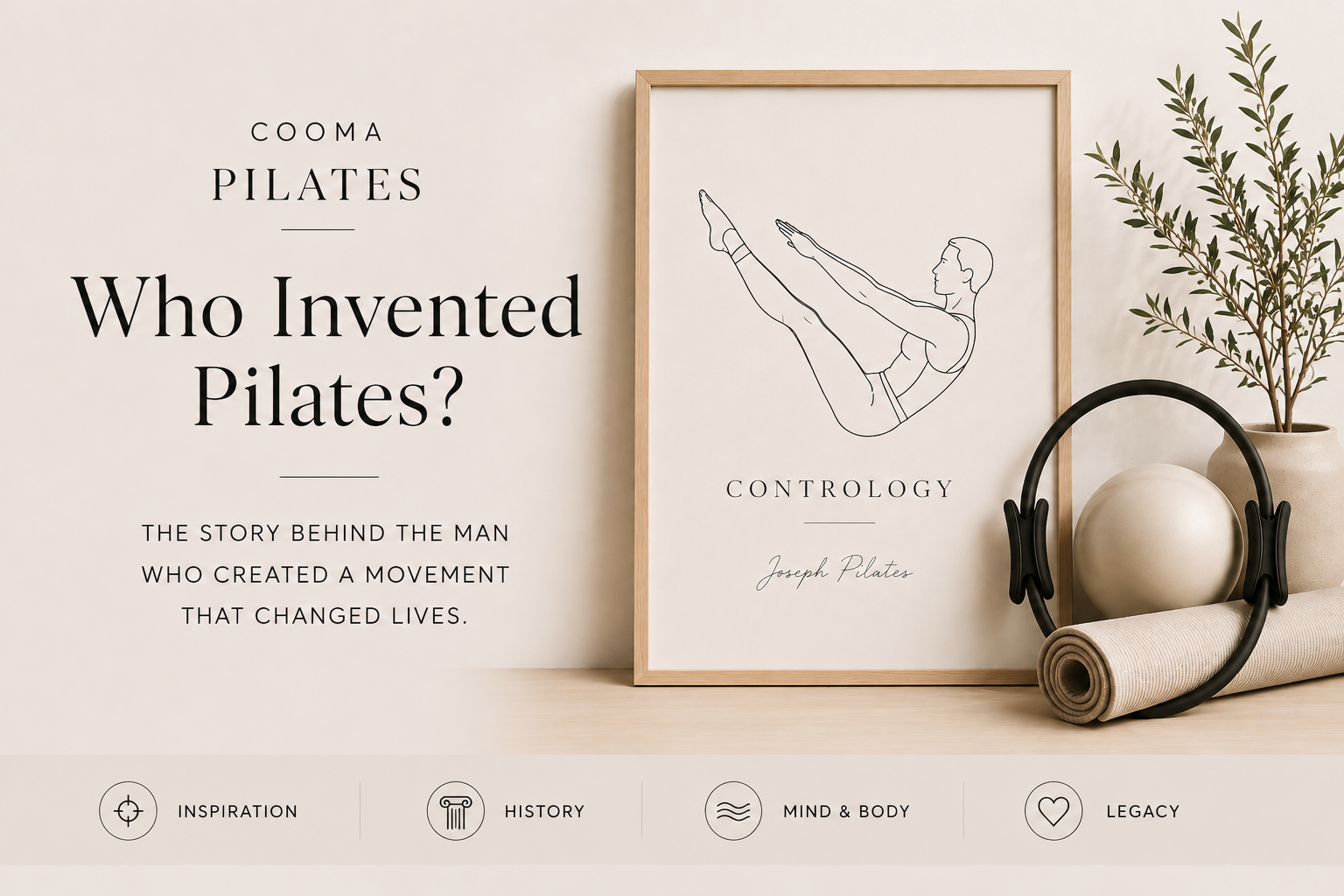
Joseph Pilates originally called his method Contrology, which he described as “the complete coordination of body, mind, and spirit.” Throughout his lifetime, he referred to the exercises and movement system as Contrology rather than Pilates.
Joseph Pilates passed away in 1967 at the age of 83. After his death, many of his students and second-generation teachers continued teaching and expanding the method around the world. Over time, people increasingly began referring to the method simply as “Pilates” — named after the man who created it — rather than its original name, Contrology. Today, the method is widely recognised internationally as Pilates, although many of Joseph Pilates’ original teachings and philosophies from Contrology still remain at the core of the practice.
While Joseph Pilates was highly respected within certain movement and dance communities during his lifetime, Pilates did not become as widely known to the general public until much later. The method grew significantly in popularity during the 1980s and 1990s as more studios opened internationally and health professionals, dancers, athletes, physiotherapists, and fitness instructors began incorporating Pilates into rehabilitation, conditioning, and general fitness programs. Today, Pilates is practised worldwide and continues to evolve across both fitness and clinical settings.
Joseph Pilates also authored books about his philosophy and exercise method, including Return to Life Through Contrology. In this book, he outlines his original mat exercises while also sharing his broader views on health, posture, breathing, movement, and modern lifestyle habits. His writing reflects how strongly he believed that regular movement and physical conditioning could improve both individual health and society as a whole. Even today, many Pilates instructors and enthusiasts still refer back to his original teachings and writings.
Today, Pilates is practised all around the world in many different forms, including:
Classical Pilates
Contemporary Pilates
Clinical Pilates
Fitness Pilates
Rehabilitation-based Pilates
While modern Pilates has evolved over time, many of the original principles developed by Joseph Pilates are still used today, including:
Concentration
Control
Precision
Breath
Flow
Alignment
One of Joseph Pilates’ most well-known quotes is:
“In 10 sessions you’ll feel the difference, in 20 you’ll see the difference, and in 30 you’ll have a whole new body.”
At Cooma Pilates, matwork classes are inspired by the core principles of Pilates — helping people move with greater strength, awareness, balance, posture, confidence, and control in a supportive and welcoming environment.
Pilates vs Yoga: What is the difference?
Pilates and yoga both support mindful movement and wellbeing, but they each have different focuses. Learn the key differences between the two practices.
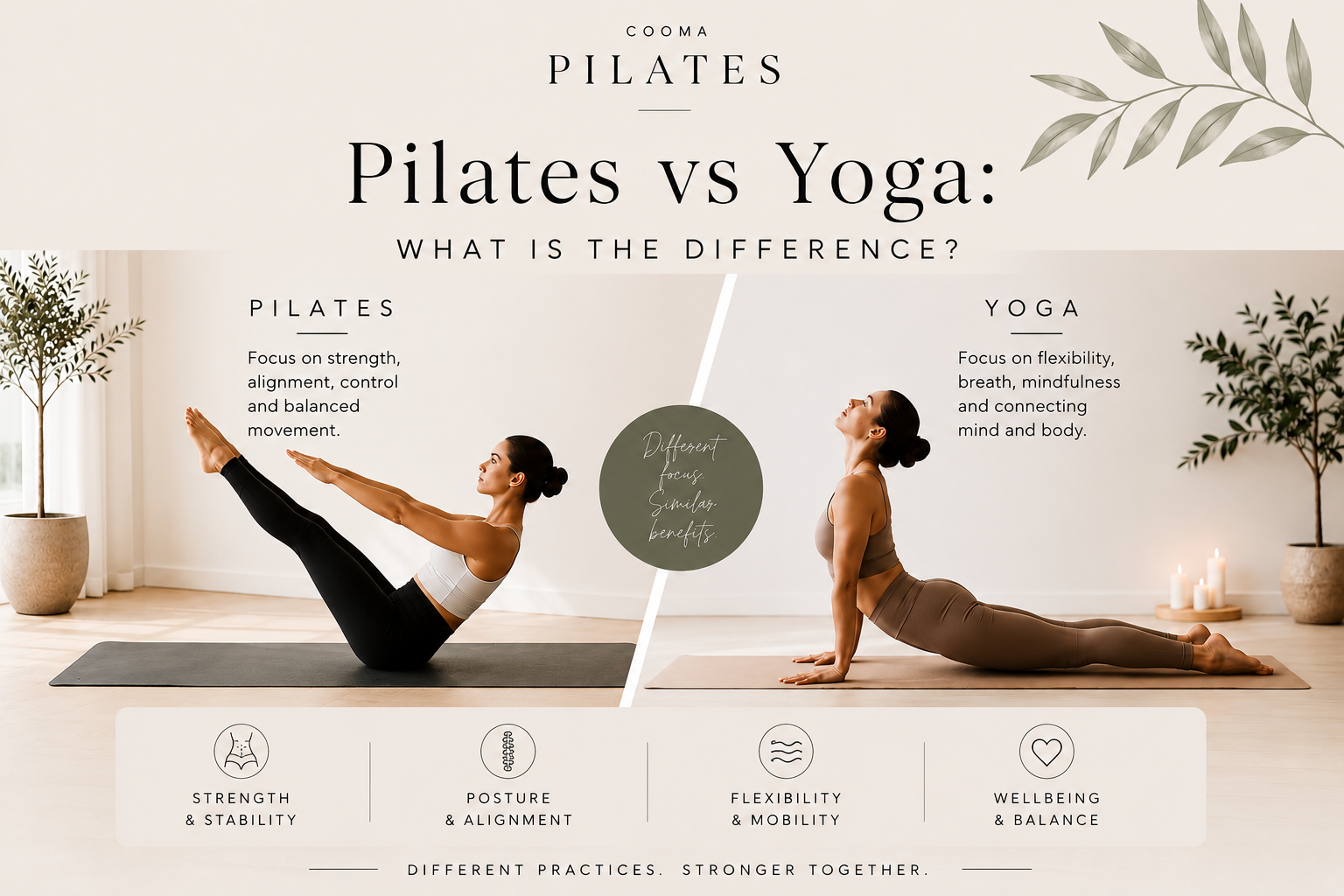
Pilates and yoga are both wonderful forms of movement that focus on the connection between body and mind. While they may look similar at times, they each have different focuses and approaches. Both Pilates and yoga incorporate breath and mindful movement, and both can help improve strength, flexibility, balance, and overall wellbeing. One of the biggest differences is often the overall focus of the class. Pilates tends to place a strong emphasis on:
Controlled movement
Core strength
Posture and alignment
Stability and body awareness
Balanced full-body strength
Breath is also a very important part of Pilates. Movements are often coordinated with the breath to help improve control, focus, and flow throughout the exercises. Many people find Pilates mentally calming because the concentration required encourages you to focus on the present moment and the way your body is moving. Yoga often places a greater emphasis on:
Stretching and flexibility
Holding poses for longer periods
Mindfulness and meditation
Traditional spiritual foundations and practices
Some styles of yoga include strong strength-based elements as well, while others are slower and more relaxation-focused.
Yoga is an ancient practice that originated in India thousands of years ago and has deep spiritual and philosophical foundations. Many yoga poses and terms are traditionally named in Sanskrit, an ancient language of India. Depending on the style of yoga, classes may place a strong emphasis on mindfulness, meditation, breathwork, and spiritual practice alongside physical movement.
Pilates generally does not have a religious or spiritual connection attached to it. Instead, the mindfulness often comes through the movement itself — focusing on breath, control, alignment, and moving with awareness.
Pilates was developed much more recently by Joseph Pilates in the early 1900s. During World War I, he began developing exercises and movement-based rehabilitation techniques that later evolved into the Pilates method known today. Modern Pilates is commonly used in fitness, rehabilitation, and movement settings, and has become widely incorporated by physiotherapists, exercise professionals, and other health practitioners to help support strength, posture, stability, mobility, and body awareness.
Neither Pilates nor yoga is “better” than the other. They simply offer different experiences and benefits, and many people enjoy incorporating both into their routine. While both Pilates and yoga can offer many benefits for the body and mind, they each have different histories, approaches, and focuses. Many people enjoy one or both depending on their personal goals, preferences, and movement style. Everyone connects differently with movement, so it can be valuable to try both Pilates and yoga to see which style feels best for you — or whether you enjoy a combination of both.
If you’d like to experience Pilates for yourself, Cooma Pilates offers supportive matwork classes designed to help you move with greater strength, control, balance, and body awareness.
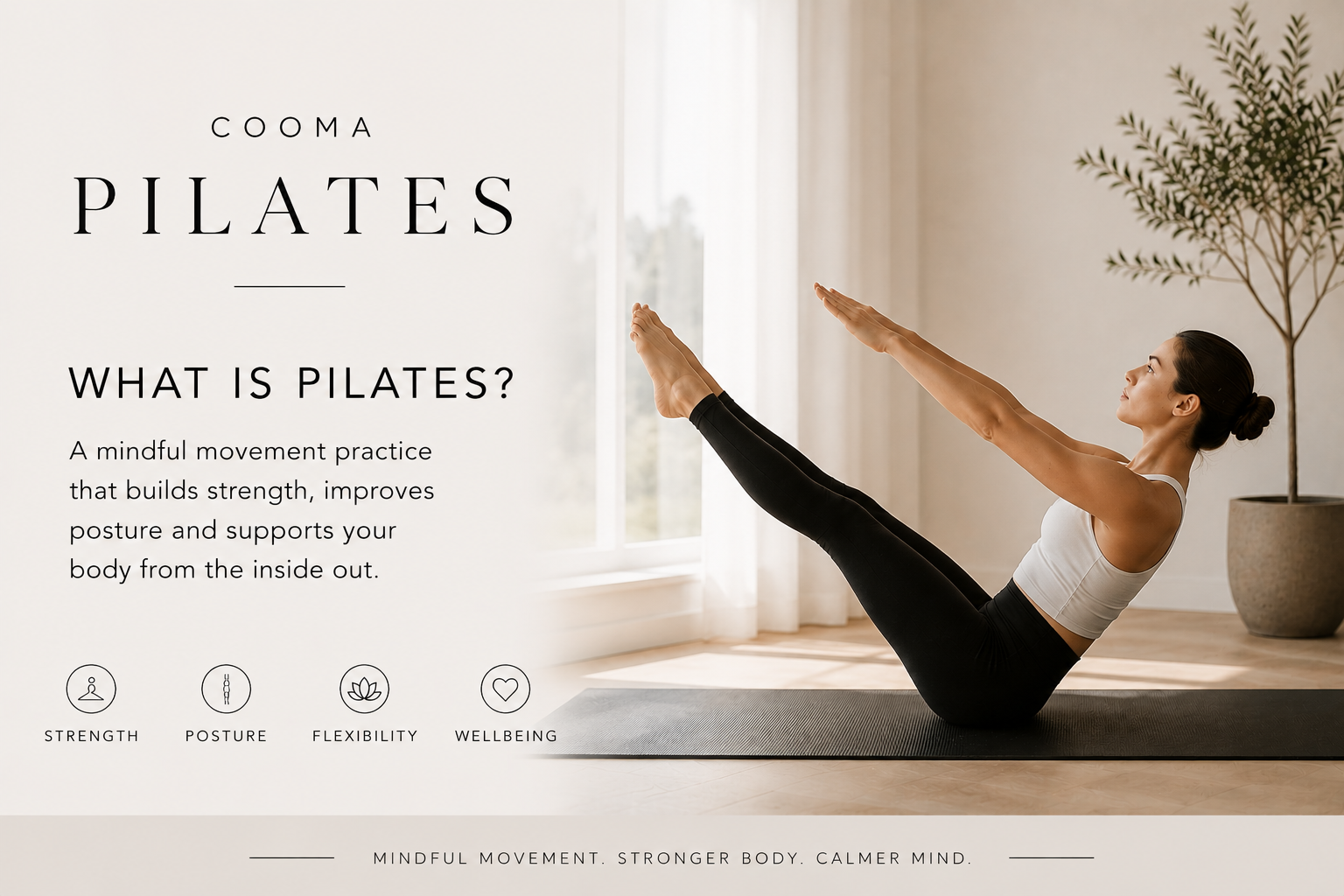
What is Pilates?
New to Pilates? Learn what Pilates is, the benefits of matwork Pilates, and how mindful movement can help support strength, posture, flexibility, and overall wellbeing.
Pilates is a form of low-impact exercise focused on controlled movement, posture, alignment, strength, flexibility, and breath. It is designed to strengthen the body in a balanced way while improving overall body awareness and movement quality.
Unlike high-intensity workouts or heavy weight training that often focus on speed, power, heavy exertion or lifting heavier loads, Pilates encourages controlled, intentional movement with a strong focus on alignment, posture, stability, and body awareness. The movements are often slower and more deliberate, allowing you to move with greater control, awareness, and connection to your body rather than simply pushing through an exercise. While all forms of exercise have their place, Pilates is often considered a gentler, lower-impact form of movement that aims to support the body through balanced strength, mobility, and mindful movement with less unnessary strain on the joints and body.
Pilates places a strong focus on the muscles that support stability, posture, balance, and controlled movement. While core strength is an important part of Pilates, it is much more than just abdominal exercises. A well-rounded Pilates class works the entire body, including the legs, glutes, back, shoulders, and posture muscles.
Many people enjoy Pilates because it can help improve:
Core strength
Posture and alignment
Flexibility and mobility
Balance and coordination
Body awareness
Strength and muscular endurance
General wellbeing and movement confidence
One of the wonderful things about Pilates is that it can suit many different people and fitness levels. Exercises can often be modified to make them more supportive or more challenging depending on the individual.
At Cooma Pilates, classes focus on supportive matwork Pilates in a welcoming environment. The aim is to help people move in a way that feels good for their body while building strength, improving posture, and developing confidence through movement.
Pilates is not about perfection. It is about learning to move with greater awareness, control, and balance over time.
Whether you are completely new to movement classes or have exercised for years, Pilates can be a fantastic way to support both body and mind.